Gerrymandering happens, but New Jersey makes it harder.
You've probably heard of Gerrymandering — that's when redistricting is manipulated for political gain. It can change who represents you, the number of party representatives, voting locations, and more. But Gerrymandering isn’t automatic. It doesn’t have to happen. Redistricting does. And the two shouldn’t be confused.
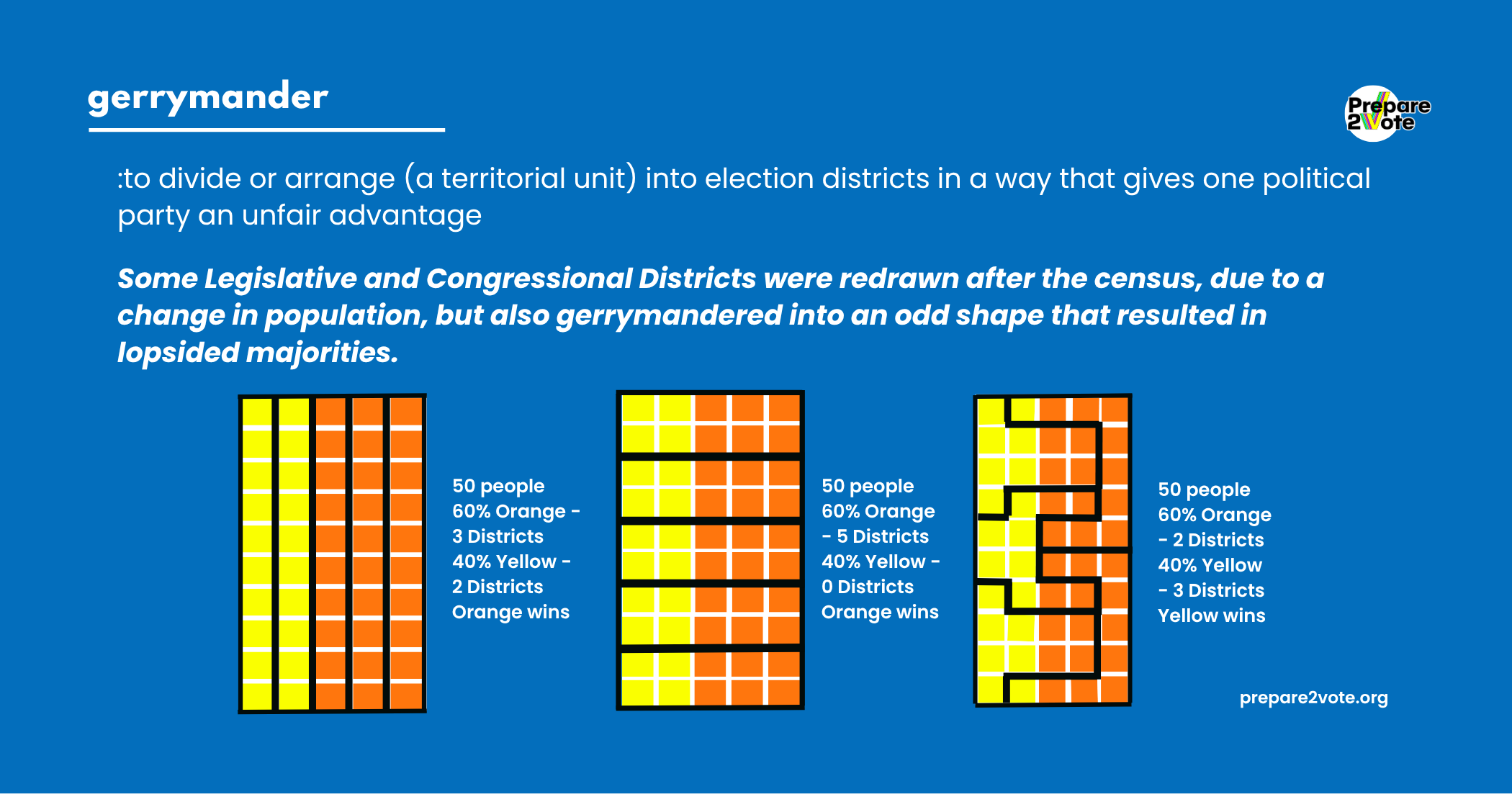
Each state has their own system for redistricting.
We think you should know how the process works in New Jersey because we think the State Legislature established a system that makes a good effort to ensure fairness and avoid gridlock.
New Jersey created a 13-member Redistricting Commission. Eight members are appointed by the State Legislature — the Senate President, Assembly Speaker, and both minority leaders each pick 2. Each State Party Committee Leader appoints 2. That's 12. The 13th is the Chair, chosen by the Commission itself (or by the State Supreme Court if they can't agree). The Chair must have lived in NJ for at least five years and can never have held political office in the state.
The new map is drawn by the Commission based on census population data (a big reason why getting counted matters!). The Commission also holds at least three public hearings across the state, giving everyday residents a chance to weigh in on why they might not want change in their district. Congress has a lot to do with things like public transportation, emergency management, or a major improvement project, so a district shift can have an impact one way or the other.
After these public meetings and many hours of deliberation, the Commission votes to establish the new map, unless there is a tie. Then the Chair casts the final vote.
It’s done every ten years. The most recent map took effect in 2023. Will our state move to redistrict like others have? We don't know. But now you know how it works in New Jersey.